Saturday, February 28, 2009

There is Power in a Union -2008-2009

"There is Power in a Union -2008-2009"--Progressive Librarian Winter 2008/2009.
In 2008, union members accounted for 12.4 percent of employed wage and salary workers, up from 12.1 percent a year earlier according to the Bureau of Labor Statistics. The number of workers belonging to a union rose by 428,000 to 16.1 million. After democratic wins in the 2008 elections, working people and unions look forward to legislative changes under pro-worker president, Barack Obama. The first legislation signed in the Obama administration was the Lilly Ledbetter Fair Pay Act,
which allows more leeway for women and others seeking justice over pay discrimination (Abrams).

George Miller, chair of the U.S. Congress,Committee on Education and Labor stated:
With President Obamaʼs signature today, we ensure that women and other workers who are discriminated against while on the job have the ability to receive a fair remedy. Ongoing pay discrimination is an attack on all working Americans and must be stamped out. The Congress and the President restored the law today and ensured that discriminatory paychecks are not immune from challenge.


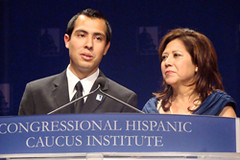
Congresswoman Hilda Solis, appointed as Secretary of the Department of Labor by president, Barack Obama is a progressive with a commitment to work with grassroots labor, environmental and immigrant worker movements. She has served on the board of American Rights at Work (Moberg). Solis is the daughter of immigrants from Mexico and Nicaragua. Her father was a union shop steward, and her mother was an assembly line worker.

In 2008 the only reporting and analysis of librarians and unions indexed in Library Literature & Information Science Full Text was published in the Progressive Librarian.
Progressive Librarian #30 (Winter 2007/2008) focused on Library Workers in Unions with “So Promising of Success”: The Role of Local 88 in the Development of the Chicago Public Library, 1937-1952,” by Joyce M. Latham; “An Indomitable Spirit: The Eight Hundred of CUPE 391,” by Anita Galanopoulos; and “There is Power in a Union-2007.” Progressive Librarian #31 (summer 2008) included “The Union Difference for Library Workers, Salary Survey 2006;” “Library Workers: Facts and Figures;” and “Professional Women: Vital Statistics.”

The lack of attention to union issues in the general library press continues to be a concern that should be addressed by those who believe that library workers and their conditions of worklife contribute to better library service. As posted at American Rights at Work, “Unions are an essential part of a strong democracy and play a crucial role in Americaʼs public and community life. Not only do they give workers a voice on the job and help negotiate fair benefits and wages for their members, but they also use their political and economic resources to raise the floor for everyone who works for a living.”

For the entire essay see: "There is Power in a Union -2008-2009"--Progressive Librarian Winter 2008/2009.
by Kathleen de la Peña McCook,
AFT Local 7463

Wednesday, February 25, 2009

One Year Pay Freeze for UMass-Boston's Librarians


AMHERST — A union representing faculty and librarians has reached a tentative agreement with UMass-Amherst and UMass-Boston on a contract that includes a one year salary freeze.

Massachusetts Society of Professors president Randall Phillis said Monday that the union had to accept the pay freeze because members wanted to avoid layoffs and program cuts on campus.

Sunday, February 22, 2009

Grand Forks BC Library Worker Support Rally: CUPE 2254

Five members of CUPE 2254 were locked out of the Grand Forks BC Public Library on January 20 and have been on the picket line ever since. At issue is an attempt by the library board and its’ high-priced “consultant” to gut a collective agreement developed over 15 years of good faith bargaining. Under attack is seniority, promotion, job classification, vacations, hours of work, and job security.

Canadian Union of Public Employees (BC Division) president Barry O’Neill will be joined by BC Federation of Labour secretary-treasurer Angie Schira and CUPE BC vice president Bev LaPointe in support of the library workers.

O’Neill says CUPE is proud of the resolve of the CUPE 2254 members holding their ground to protect their rights. “They have sent a clear message that libraries are the cornerstone for communities all across this province. Those who work there are well aware of that, however these workers have shown that they will not be bullied into giving up on gains that have been fairly negotiated over the years.”

“Make no mistake, these workers are not alone —they are supported by the 80,000 CUPE members in B.C. and by CUPE members across Canada. We are coming to Grand Forks to show our unflagging solidarity with these five workers,” O’Neill said.

WHAT: Support rally for library workers
WHEN: 12 Noon, Saturday, February 21
WHERE: Outside the public library at 7342 Fifth Street, Grand Forks

Thursday, February 19, 2009

Jean Dickson: United University Professions and Local 65 of the United Steelworkers of America,


A feature story on the activist union librarian, Jean Dickson who has been grievance officer, vice president and president of the Buffalo Center Chapter of United University Professions, the union representing UB faculty and professional staff.

Radical Vision for Today's Labor Movement

Working families need a decent wage, but they also need the promise of a better world. For as long as we’ve had unions, workers have shown they’ll struggle for the future of their children and their communities, even when their own future seems in doubt. But it takes a radical social vision to inspire that wave of commitment, idealism, and activity.


"A Radical Vision for Today's Labor Movement: The Importance of Internationalism and Civil Rights." by David Bacon in Monthly Review.Feb. 2009: 29-35.

Wednesday, February 18, 2009

Librarians, UC Reach Impasse In Negotiations


Harrison Dekker, head of the library data lab, is pictured at Doe Library. Negotiations between the union representing the librarians and the university have reached an impasse.
"We can't say that our salaries are OK because the economy is bad," Dekker said. "We are not going to stop negotiating based on that." --Harrison Dekker, local president of the union and a librarian at UC Berkeley


The union representing UC Berkeley librarians and the university declared an impasse in their contract negotiations Wednesday, according to UC spokesperson Paul Schwartz.

UC librarians argue that their salaries are inconsistent with those of others at similar institutions, while university officials say they are unable to raise salaries due to the current budget crisis.

At present, salaries for librarians in the UC system are between $40,000 and $110,000 a year, according to union officials. ...

Among the reasons for the impasse are hiring issues associated with the salaries.

"If our salaries aren't competitive, it's harder to attract and retain new librarians," Dekker said.


Union members said current salaries discourage qualified librarians from taking jobs in the UC system, causing the quality of services to suffer.

The union has tried to raise awareness of these issues through a UC system-wide petition, collecting about 2,000 signatures at UC Berkeley.

Sunday, February 15, 2009

UC cannot continue to short-change its libraries and librarians


Nearly 20 years of staff reductions and the most meager of salary increases have left UC librarians with a greater workload, dwindling resources, and far behind their counterparts at other institutions in terms of pay. UC cannot continue to short-change its libraries and librarians without detriment to its educational and research mission. We say it’s past time for UCOP to adjust its priorities and make good on its ‘commitment’ to address academic and staff pay inequities.
UC’s more than 400 librarians play a critical role in supporting and contributing to the University of California’s mission to teach, conduct research, and provide public service. Librarians perform activities that enable UC to meet the needs of its faculty and student communities, such as:

* Building and preserving academically pertinent library collections
* Negotiating with companies to provide high-quality academic research databases and printed materials, containing scholarship not available through Google
* Teaching information-seeking and evaluation skills to help students engage more critically in their UC courses
* Contributing to professional library associations by publishing research and presenting at conferences
* Connecting with local communities to engage with high schools and provide other forms of public service to the general community.

Bangor Flying Circus

Bangor Flying Circus - Bangor Flying Circus

Sunday, February 08, 2009

Hamden OKs library workers’ pact

Jan.29, 2009.
Hamden, CT. contract for Local 1303-115 of the American Federation of State, County and Municipal Employees is retroactive to July 1, 2007, and runs through June 30, 2011. It calls for wage increases of 2.75 percent each year.

Friday, February 06, 2009

Community of Industrial Relations Librarians -CIRL

The Community of Industrial Relations Librarians (formerly the Committee of Industrial Relations Librarians) is an international group of information professionals from academic, union, government, corporate, and nonprofit organizations in the field of industrial relations and human resource management who cooperate on projects, share resources and information, and learn from one another.

CIRL's goal is to serve researchers and practitioners by collecting, preserving, organizing, and making available specialized resources using both tested and new technologies, and to encourage instruction and training in the use of such resources.

CIRL further seeks to create awareness of the problems and issues in the workplace and to improve information dissemination about them.

Member Libraries:

* Institute for Research on Labor and Employment (IRLE, Berkeley)

* Institute for Research on Labor and Employment (IRLE, UCLA)

*
School of Industrial & Labor Relations, Cornell University

*
Institute of Labor and Industrial Relations, University of Illinois

*
Labor and Industrial Relations Library, Michigan State University

*
Center for Human Resources and Labor Studies, University of Minnesota

*
Industrial Relations Library, Princeton University

*
James Carey Library at the School of Management and Labor Relations, Rutgers University

*
Jean & Dorothy Newman Industrial Relations Library, Centre for Industrial Relations, University of Toronto

*
Walter P. Reuther Library, Wayne State University

*
United States Department of Labor, Wirtz Labor Library

*
Canada Industrial Relations Board

*
BNA Library

*
International Labour Organization (ILO) Library

*
George Meany Memorial Arch Library

*
New York Public Library

*
National Labor Relations Board Library

*
NYS Dept of Labor Library

*
UAW Research Library

*
NLRB - Main Library

*
W.E. Upjohn Institute for Employment Research

*
Social Development Canada Departmental Library

*
Commission for Labor Cooperation -- Library

*
Holt Labor Library

*
Alberta Government Library -- Labour Building Site

Thursday, February 05, 2009

Roy Stone Quote on Strength of the Union

Only through the strength of the union can we defeat the challenges to our profession. It is not just the increased salaries as a result of the union’s efforts, but our survival as a profession that is at stake. I ask you to become more active in your union, and make it focus on your professional, salary, safety and recruitment concerns. It is up to us to continue this proud and valuable profession. Our neighborhood, our community, our society depend on it. Take action now!


--Roy Stone,president of the Librarians’ Guild at the Los Angeles Public Library System. “How a Librarians’ Guild Maneuvered a Win for Salary Increases.” Library Worklife 5 (September, 2008).

Vote on Solis Nomination


After Delay, Panel to Vote on Solis Nomination

By Michael A. Fletcher
Washington Post Staff Writer
Thursday, February 5, 2009; A04


The nomination of Rep. Hilda L. Solis (D-Calif.) for labor secretary goes to a scheduled Senate committee vote today after a face-off with Republican lawmakers that highlights their disagreements with President Obama's labor policies.

Solis's refusal during her confirmation hearing last month to be pinned down on issues including the Employee Free Choice Act, which she previously co-sponsored in the House, and her view of ergonomic rules lifted during the Bush administration, led to threats from some GOP lawmakers to place a hold on her nomination that could lead to further delays once it was on the Senate floor.

Lawmakers also raised pointed questions about her work with American Rights at Work, a pro-labor group for which Solis serves as an unpaid treasurer. Some lawmakers questioned whether her position on a board that organization officials said meets only annually amounts to a lobbying role, something Solis has disputed....

The holdup in Solis's confirmation has prompted some anxiety among labor leaders, who are eager to see the job filled. "We need a labor secretary," said William Samuel, director of government affairs for the AFL-CIO. "There is a lot going on in the economy."

The wrangling over Solis's nomination comes at a pivotal time for organized labor, which is in its strongest political position in many years, with a president and majorities in both chambers of Congress supportive of many of its top legislative priorities.

Obama has spoken out strongly in favor of many union-backed issues and has said that one of his economic goals is to address some of the imbalances that have caused wages for most Americans to stagnate while top wage earners received sharp pay increases.

"I don't see organized labor as part of the problem," Obama said last week after signing three pro-labor executive orders and appointing a task force to examine issues important to the middle class. "To me, it's part of the solution."

Yesterday, organized labor turned up the pressure on Congress to consider the Employee Free Choice Act, which would make it easier for workers to organize unions. Workers gathered on Capitol Hill to begin delivering petitions with a reported 1.5 million signatures.

Pressure to oppose the measure is intense, as well. "This is the most unifying issue for business right now," said John Engler, president and chief executive of the National Association of Manufacturers.

With the last of Solis's answers submitted last week, Senate staffers said they expected her nomination to proceed to the floor for a full Senate vote shortly after the committee vote. "My sense is she has probably got the support to move on through the Senate," one GOP aide said.

Wednesday, February 04, 2009

Rally Today for Employee Free Choice Act-Power of a Union

Let's not forget that historically, workers organizing into unions are what made higher wages, paid leave, health insurance and retirement benefits standard compensation in what were once "bad" manufacturing jobs. This transformation helped put these workers solidly into the middle class, from which generations of Americans raised families, bought homes and put their children through college.

The Employee Free Choice Act is the next logical step in strengthening the middle class by helping the American workforce get back on its feet.

Tuesday, February 03, 2009

Employee Free Choice Act Rally Tomorrow


Throughout the past year, supporters of the freedom to form unions and bargain have carried out a national campaign to pass the Employee Free Choice Act. Tomorrow, thousands of workers will come to Washington, D.C., to deliver thousands of petitions demanding Congress pass the Employee Free Choice Act and make the economy work for everyone.


The union movement’s Million Member Mobilization has been a great success, collecting 1.5 million signatures and showing broad public support for the freedom to form unions and bargain for a better life. You can see some of the cards representing the broad coalition of union members and nonunion members here.

The fight to pass the Employee Free Choice Act kicks off with a rally at 12:30 p.m. in the upper Senate park outside the U.S. Capitol. Workers from across the nation who were intimidated and harassed during their attempt to form a union will speak about what’s wrong with our current system and why the Employee Free Choice Act is necessary to help fix it. These workers are just a few of the thousands of workers who are coerced or even terminated every year for trying to exercise their basic freedom to form a union and bargain.

In addition to workers who have faced corporate coercion in their attempt to form a union, the rally will feature Rep. George Miller (D-Calif.) and Sen. Tom Harkin (D-Iowa), two sponsors of the Employee Free Choice Act. United Steelworkers (USW) President Leo Gerard also will speak. After the rally, workers will visit their members of Congress to speak directly about the importance of fixing our broken system and restoring the freedom to form unions. The voices of ordinary workers are essential to counterbalance the multimillion dollar disinformation campaign coming from corporations and their shady front groups.

Tomorrow, the efforts of more than a million workers around will pay off, as members of Congress will get to see the real people whose lives are affected and the millions of signed cards representing a grassroots movement for the Employee Free Choice Act.

Ready To Rumble

One of the most critical political battles this year will be the fight over the Employee Free Choice Act (EFCA). Passed by the House but filibustered in the Senate in 2007, the act would make it easier for workers to form unions.

Monday, February 02, 2009

"Why Unions are Important" by Holly McCarthy

=======
"Why Unions are Important – Regardless of Profession."
Holly McCarthy


With the current economic situation affecting nearly every person in some way these days, it is easy to see why so many people are looking for ways to protect themselves when it comes to wages and job security. In non-union states, people don’t really understand how things work.

Sure, unionizing and working within the parameters of a particular union can have its own challenges and period of “dues paying,” it usually works out for the best in the end as far as all parties are concerned.

Good Pay

If you are working hard and performing an essential function at a company where you have been working for some time, you should expect to be compensated accordingly. Too often, many companies and employers move toward the cheap labor without thinking about how things will work out when all is said and done.

Economic Stability

When you have skilled workers in whatever trade or field who are being paid for their abilities, you will have people who are able to go out and spend money. This isn’t just people spending money on the things that they need, but far beyond that. The people who are earning good money and feel protected also have disposable income that can be used to help stimulate other areas of the economy.

Benefits and Insurance

If you work somewhere for a long time, maybe even your whole life, you want to make sure that you will be taken care of when all is said and done. No one should have to work until their dying day. If you have put in the right amount of time and effort, you should be able to rest easy knowing that the money will still come and that you don’t have to worry about things if you get sick. The necessities of life should ultimately be taken care of if you have put in your time.

By-line:
This post was contributed by Holly McCarthy, who writes on the subject of the online colleges and universities. She invites your feedback at hollymccarthy12 at gmail dot com

South Hadley, MA Librarians May Choose a Union.


SOUTH HADLEY - The state Labor Relations Commission has denied the town's appeal of its decision allowing more municipal workers to participate in choosing a union for unrepresented employees than earlier agreed to by town and union organizers.

The decision was issued Jan. 23, with board members Marjorie F. Wittner, the chairwoman, and Elizabeth Neumeier participating.

"I'm delighted at the labor board's decision," Youth Services Librarian Marguerite A. Clancy, one of the employees trying to organize unrepresented town workers, said Wednesday. "I'm very pleased at how quickly they came to a decision." ...

Town employees have been working with Council 93 of the American Federation of County, State and Municipal Employees for the last two years to form a union representing Town Hall and other nonunionized municipal workers. About 50 are eligible to join a union that will be broken into clerical and professional units.

Leaving SEIU: Parallels Between National Union of Healthcare Workers (NUHW) Struggle and United Service and Allied Workers-RI

Backstory on Struggles of Healthcare Workers with SEIU includes story of library workers of the United Service and Allied Workers-RI.

In 2002-3, Rhode Island janitors, campus maintenance workers, and library workers represented by SEIU Local 134 were similarly told they had to merge with a Boston-based building service workers local that Stern had recently put under trusteeship. When the vast majority signed a petition to keep their own local, their wishes were ignored and members started to form an independent union, the United Service and Allied Workers-RI. Former Brown librarian and 134 business agent Karen McAninch felt compelled to support that initiative. So, she says, “the local was trusteed and I was suspended, along with all the elected officers and stewards.” Yet, by 2007, almost all of 134’s original bargaining units had voted to switch from SEIU to USAW-RI, when their contracts expired or pre-contract expiration “open periods” enabled workers to file labor board petitions to decertify Stern’s union. In the meantime, USAW-RI managed to organize 90 new members at the Providence Library, while fending off a costly, harassing lawsuit filed by SEIU against McAninch and former 134 officer Charlie Wood, who were both accused of breaching their “fiduciary duty” to the International union. (USAW’s legal defense was aided by fundraising appeals in both Labor Notes and Union Democracy Review).

Sunday, February 01, 2009

Lilly Ledbetter Act is Law

January 29, President Barack Obama signed the Lilly Ledbetter Fair Pay Act, marking the first legislative act of his presidency. The law applies to discriminatory pay complaints and remedies under several current laws, including Title VII of the Civil Rights Act of 1964 (Title VII), the Age Discrimination in Employment Act of 1967 (ADEA), and portions of the Americans with Disabilities Act of 1990 (ADA) and the Rehabilitation Act of 1973.

Providing for retroactive coverage effective May 28, 2007, the law overturns the Supreme Court decision Ledbetter v. Good Year Tire & Rubber Co., extending filing deadlines for pay-bias complaints and clarifying the definition of a discriminatory employment practice. This also impacts the handling of closed and pending complaints and suits filed after the effective date. In addition, Title VII maintains that employers must avoid any actions that may be viewed as retaliatory against employees involved in any portion of a wage discrimination complaint investigation.


Lilly Ledbetter talks about her 10-year fight for justice and the new law that bears her name.